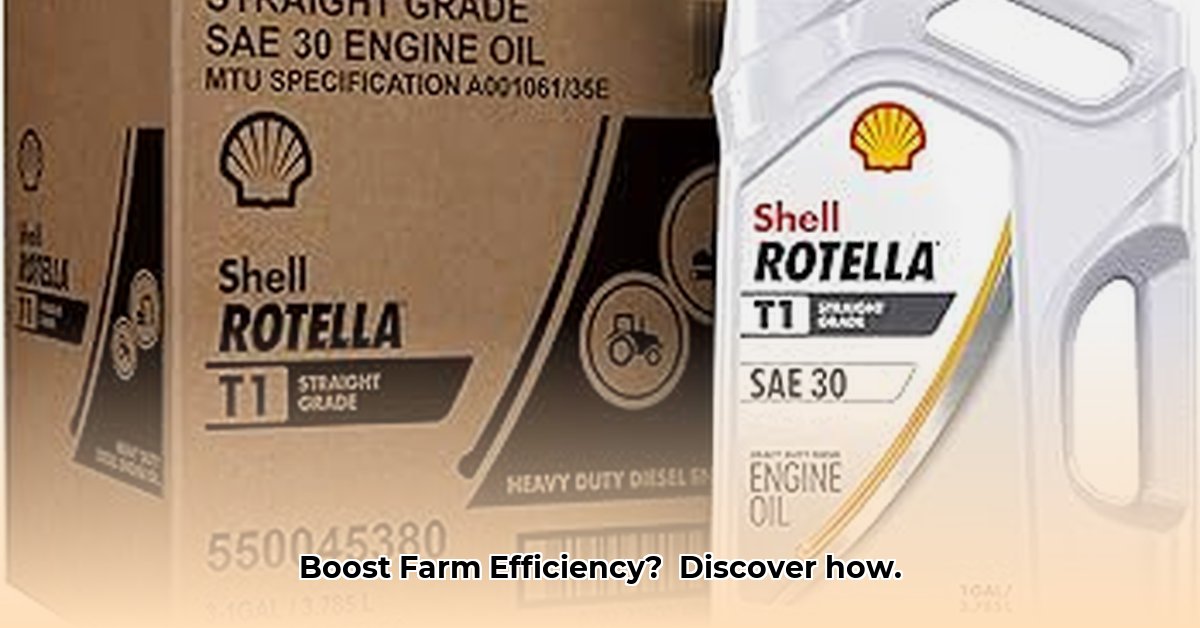
Understanding Rotella HD Tractor Fluid's Role in Sustainable Agriculture
Rotella HD tractor fluid presents a compelling case study in balancing farm efficiency with environmental responsibility. Its potential to boost fuel economy and extend equipment lifespan offers significant economic advantages for farmers. However, a complete evaluation necessitates a thorough examination of its full life-cycle environmental impact. This article explores both aspects, offering actionable intelligence for farmers, policymakers, and industry stakeholders. For more information on Rotella 15W40, check out this resource.
How can we maximize farm output while minimizing environmental burden? Rotella HD, with its promise of improved fuel efficiency, offers a potential solution. But what about its impact beyond the tractor's engine? These are crucial questions demanding a careful analysis.
Boosting Farm Efficiency with Rotella HD
Rotella HD's primary benefit lies in its potential to enhance tractor performance. Reduced friction within the engine translates to improved fuel economy, a crucial factor in controlling operating costs. Preliminary evidence suggests significant fuel savings are possible, leading to considerable financial gains for farmers. This improved efficiency reduces the financial burden on operations.
This cost reduction extends beyond mere fuel savings. By reducing wear and tear on engine components, Rotella HD may prolong equipment lifespan, minimizing the need for costly repairs and replacements. This has implications not just for profitability but also for the overall sustainability of farming operations since it extends the time before equipment is scrapped.
Could this ultimately lead to a more sustainable farming model? The answer lies in a comprehensive assessment of the fluid's environmental impact.
The Environmental Footprint of Rotella HD: A Critical Assessment
While improved fuel efficiency leads to decreased greenhouse gas emissions during tractor operation, a holistic environmental assessment requires considering the entire life cycle of Rotella HD. The manufacturing process, transportation, and eventual disposal of the used fluid all contribute to its overall environmental footprint.
The manufacturing process, involving extraction of raw materials and energy consumption, inevitably contributes to greenhouse gas emissions and waste generation. Further research is needed to quantify these impacts precisely, making a Life Cycle Assessment (LCA) study critical.
What about the potential for soil or water contamination from leaks or improper disposal? This is an area where responsible practices and strict regulations become paramount. Indeed, the full environmental impact is currently unknown and warrants further investigation. We must determine whether the long-term gains outweigh the short-term benefits or even how it compares to other high-performing fluids.
Actionable Steps for Sustainable Fluid Management
For farmers and other stakeholders to make informed decisions regarding Rotella HD, a multi-faceted approach is necessary:
- Comparative Analysis: Conduct thorough research comparing Rotella HD's performance and environmental profile to other high-performance tractor fluids.
- Controlled Field Trials: Undertake controlled tests on individual pieces of equipment, carefully documenting fuel consumption, engine performance, and maintenance requirements. This permits a direct comparison against baseline data.
- Data-Driven Decision Making: Analyze the results obtained from the field trials. This will help in forming a clear understanding of the fluid's actual benefits and potential downsides.
- Long-Term Monitoring: Extend the evaluation over multiple seasons to observe long-term performance and potential environmental effects.
- Responsible Disposal: Comply with all local and national regulations regarding the proper disposal of used tractor fluid.
Collaboration for Sustainable Agriculture
Sustainable agriculture demands a collaborative effort. Farmers, equipment manufacturers, agricultural organizations, and government agencies must work together to ensure the long-term environmental viability of farming practices. Manufacturers should invest in research and development of more environmentally benign fluids, while governments can incentivize the adoption of sustainable products through suitable policies and regulations.
“We must remember that sustainable agriculture requires a whole-system approach. The selection of tractor fluids is a critical piece of the puzzle, but it's just one element within a larger strategy for minimizing environmental impact.” Dr. Emily Carter, Professor of Environmental Sustainability, University of California, Berkeley.
Key Considerations: Weighing the Pros and Cons
| Advantages | Disadvantages |
|---|---|
| Potential for significant fuel savings | Uncertain long-term environmental impact of production |
| Possible extension of equipment lifespan | Lack of readily available, comprehensive LCA data |
| Improved operational efficiency | Uncertainty regarding the fluid's impact on soil health |
| Reduced maintenance costs | Potential for changes in regulations affecting usage |
While Rotella HD shows promise in terms of fuel efficiency and potential cost savings, more research is needed to thoroughly assess its environmental impact across its entire lifecycle. Transparency and further scientific investigation are crucial for informed decision-making. This fluid could be part of the equation towards a more sustainable future in agriculture, but rigorous study remains essential before drawing firm conclusions.